

How Car Seat Massagers Work
For many, the daily commute or a long drive can be quite a strain, especially on the back. This discomfort and strain can not only impact your driving experience, but over time, it can lead to significant health issues.
Over the past few years, the integration of massage features in car seats has brought about a revolution in driving comfort. Car seat massagers now offer a means to alleviate this strain and transform your vehicle into a mobile oasis of relaxation.
In this article, we will demystify the technology that enables this comfort during your journeys. We'll explore the fascinating world of car seat massagers, uncovering their origins, their inner workings, and how they bring you that much-needed relief during a long drive.
Whether you're considering investing in one or simply curious about how this ingenious technology works, we've got you covered. So, buckle up and let's take a journey into the science and mechanics behind car seat massagers.
The Concept of Car Seat Massagers

A car seat massager, as the name suggests, is a specially designed device integrated into a car seat that mimics the techniques used by professional masseurs. The purpose? To provide relaxation, alleviate muscle tension, and potentially reduce the discomfort or pain that might occur from long periods of driving.
The idea of integrating massage functions into car seats is not a brand new concept, but rather an innovative solution that has evolved over time. The first car seat massagers were simple and had very basic functionalities – typically vibrating to relieve tension. However, as our understanding of human anatomy, ergonomics, and comfort increased, so did the sophistication of these devices.
Today, car seat massagers can simulate several massage techniques such as kneading, shiatsu, and rolling, amongst others. Some models also incorporate heat therapy, further enhancing their ability to alleviate tension and discomfort.
They offer the possibility of turning time spent in your car, whether during a daily commute or a long journey, into a rejuvenating experience.
In the next sections, we'll delve deeper into the different types of car seat massagers available, the key components that make them work, and the intricate operations that take place within these massagers to provide you with the relaxation and comfort you desire.
Different Types of Car Seat Massagers
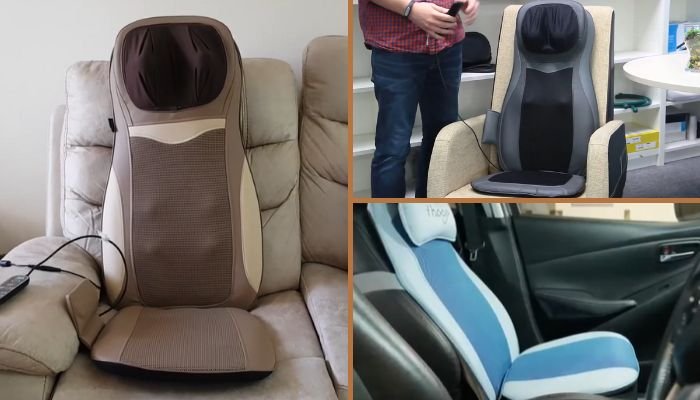
Car seat massagers may seem simple on the surface, but in reality, they are sophisticated devices with various designs, structures, and functionalities. There are primarily three types of car seat massagers: Shiatsu, vibration, and heat therapy massagers. Each type has its own unique features, providing different kinds of relief and comfort to the user.
Shiatsu Car Seat Massagers
Shiatsu, a traditional Japanese massage technique, literally means "finger pressure". Shiatsu car seat massagers are designed to mimic this technique. They typically have four or more rotating nodes that move in a circular motion, simulating the feeling of a masseur's hands kneading your muscles.
This method is effective in relieving muscle tension, promoting relaxation, and improving circulation. Some advanced models even offer 3D Shiatsu, adding another dimension of movement for a more in-depth massage.
Vibration Car Seat Massagers
Vibration massagers are the earliest and most basic type of car seat massagers. These devices operate by creating a vibrating motion which can soothe and relax muscles. They usually have several motors distributed across the seat at strategic points to target different areas of the body.
While they may not offer the deep tissue massage that Shiatsu massagers do, vibration massagers are still a popular choice due to their simplicity and effectiveness in providing quick relief.
Heat Therapy Car Seat Massagers
Heat therapy massagers employ heat elements to provide warmth to the user. The heat can be very effective in soothing sore muscles, enhancing blood circulation, and promoting better relaxation. Many car seat massagers combine heat therapy with either Shiatsu or vibration techniques to augment their effectiveness.
In the upcoming sections, we'll explore the key components that make these massagers work, from the nodes and motors to the heat elements and control units, giving you a clearer understanding of what goes on under the surface.
Key Components of Car Seat Massagers
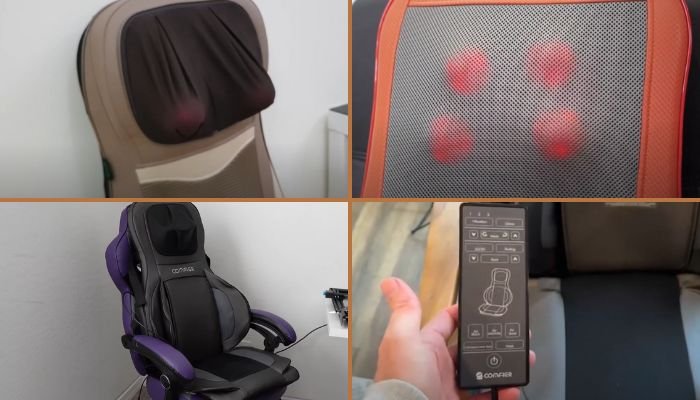
To fully appreciate the complexity and sophistication of car seat massagers, it's essential to understand the key components that make them work. Regardless of the type of car seat massager, the core components usually include massage nodes or motors, heat elements, and a control unit.
Massage Nodes
Present in Shiatsu car seat massagers, massage nodes are small, round mechanical elements that move in a specific pattern to mimic various massage techniques. They're strategically positioned to target pressure points on the user's back and neck. Some advanced car seat massagers even have nodes that can move along a track, allowing a customizable massage experience.
Motors
For vibration-based car seat massagers, motors are the heart of the system. They generate the vibrating motion that provides the massage. Each motor is typically positioned to target specific areas of the body, such as the lower back, upper back, thighs, and neck. The intensity of the vibrations can usually be adjusted to suit the user's preference.
Heat Elements
Used in heat therapy car seat massagers, heat elements provide soothing warmth to the user. They can be standalone or combined with Shiatsu or vibration techniques for a more comprehensive massage. The heat helps to relax muscles, relieve tension, and improve blood circulation.
Control Units
Control units or panels are the interface through which users interact with the car seat massager. They can vary from simple buttons to sophisticated touch panels or even smartphone apps. Through the control unit, users can adjust the type, intensity, and duration of the massage, and in some cases, customize the movement of the massage nodes.
Now that we've identified and understood the key components let's explore how these parts come together to provide the relaxing and soothing massage experience in your car seat.
How Car Seat Massagers Function
Knowing the components of car seat massagers is only half of the story. Understanding how these components work in unison to create a personalized massage experience is what truly highlights the marvel of this technology. Let's delve into how these systems function.
The first step in any massage cycle is input from the user. Through the control unit, the user selects their preferred type of massage, intensity, and duration. Once the selection is made, the massage nodes or motors spring into action, depending on the chosen type.
In a Shiatsu massage, the nodes move in a circular motion, exerting pressure on key points of the body, thereby mimicking a manual massage. The nodes can often move up and down along a track, allowing them to target different parts of the back, from the neck down to the lower back.
In a vibration massage, the motors vibrate at a chosen frequency. This vibration is then transferred to the body through the seat, providing a gentle, relaxing massage. Depending on the model, you can usually adjust the frequency of the vibrations, thereby controlling the intensity of the massage.
If the user has selected a massage type with heat therapy, the heat elements gradually warm up the seat. The warmth permeates through the muscles, encouraging them to relax and easing tension. The heat also aids in promoting blood circulation, which in turn can assist in pain relief and muscle recovery.
Vibration and Shiatsu car seat massagers function quite differently. While vibration massages rely on a consistent frequency of movement to relax the muscles, Shiatsu massages use rotating nodes to exert pressure on specific points, more closely imitating a manual massage. Shiatsu massages often offer a deeper level of muscle relaxation and tension release compared to vibration massages.
Now that we've discovered the mechanics of car seat massagers let's look at some of the advanced features that modern units offer to enhance your massage experience even further.
Advanced Features in Modern Car Seat Massagers
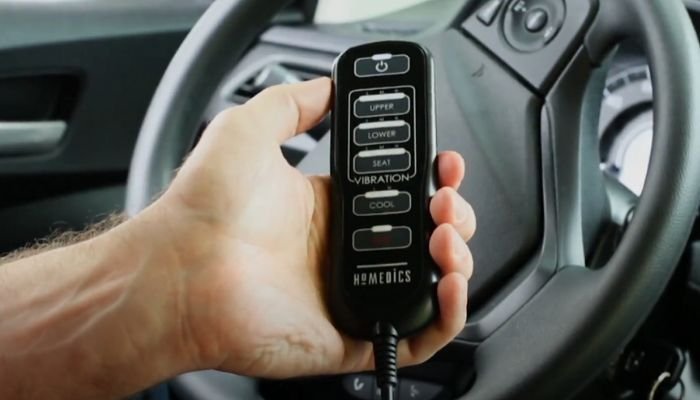
In addition to providing basic massaging functionalities, many of today's car seat massagers come equipped with advanced features designed to deliver a more personalized and enhanced user experience.
Remote Controls and Smart Functions
Most modern car seat massagers come with remote controls for ease of use. Some even integrate smart functionalities, including Bluetooth and smartphone app control. This allows users to adjust settings right from their mobile device, offering a seamless and comfortable user interface.
Programmable Massage Cycles
Some advanced car seat massagers allow users to program personalized massage cycles. This means that you can customize your massage sequence to fit your preferences, including the type, intensity, and duration of the massage, as well as the areas of focus.
Body-Sensing Technology
A truly cutting-edge feature available in some top-tier car seat massagers is body-sensing technology. These systems can detect the size, shape, and contours of the user's body, allowing the massager to adjust its movements and pressure points accordingly. This ensures a more targeted and personalized massage.
As impressive as these features may sound, the design and functioning of car seat massagers also prioritize safety. In the next section, we'll explore some of the safety features typically found in car seat massagers.
Safety Features in Car Seat Massagers

As comforting and convenient as car seat massagers are, they must also ensure the safety of users. Therefore, manufacturers have incorporated several safety features into these devices to make them as safe as they are soothing.
Overheat protection is a common safety feature found in car seat massagers, especially those with heat therapy options. This feature ensures that the heat elements do not exceed a safe temperature, protecting the device and the user from potential overheating and associated risks.
An auto shut-off feature is designed to automatically turn off the massager after a certain period. This not only prevents the device from overheating but also safeguards the user from potential injuries that could arise from prolonged use, such as muscle strain or bruising.
Manufacturers also adhere to specific safety regulations and standards during the production of car seat massagers. This includes the use of safe, non-toxic materials and compliance with electrical and operational safety guidelines. Before purchasing a car seat massager, it's recommended to check if the product has been approved by recognized safety standard institutions.
Safety, though vital, is just one aspect of car seat massagers. The science behind the benefits they provide forms the backbone of their appeal. Let's delve into this topic in the next section.
The Science Behind the Benefits of Car Seat Massagers
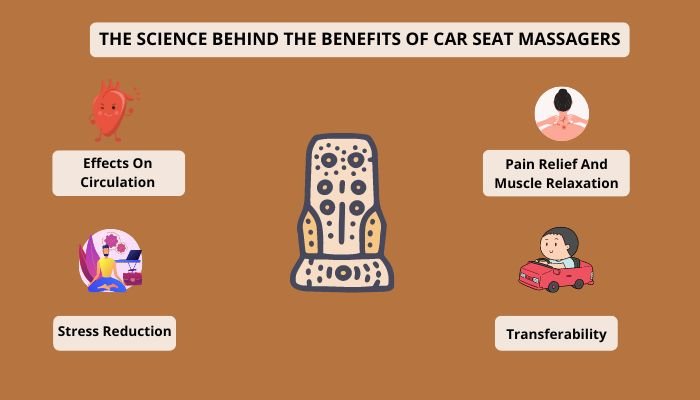
While the relief and relaxation offered by car seat massagers can be felt immediately, there's an underlying scientific explanation for these benefits. Car seat massagers can impact both the physical and mental health of users positively.
Effects on Circulation
One of the main benefits of massage is the improvement of blood circulation. When the massage nodes or motors exert pressure on your muscles, they stimulate blood flow in that area. Increased circulation can help deliver oxygen and nutrients to muscle cells more efficiently, aiding in recovery from muscle fatigue and strain.
Pain Relief and Muscle Relaxation
Massage, whether manual or mechanical, has been shown to relieve pain. It does so by triggering the release of endorphins, the body's natural painkillers. Besides, the pressure exerted by car seat massagers helps relieve muscle tension and stiffness, promoting relaxation and reducing discomfort.
Stress Reduction and Enhanced Focus while Driving
The relaxing effect of massage can also lead to stress reduction. When your body relaxes, your mind often follows, helping to reduce anxiety and enhance mood. Moreover, a comfortable and relaxed driver is likely to be more focused and alert, contributing to safer driving.
From their humble beginnings as basic vibration units, car seat massagers have evolved into sophisticated devices capable of delivering a personalized massage experience on the go. While they certainly offer immediate comfort and relaxation, understanding the science and mechanics behind their operation can truly enhance our appreciation of these remarkable devices.
